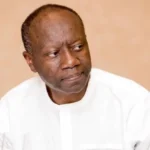
The Chief of Agric Nsimah, Nana Nkansah Boadu Ayeboafo, has issued a direct challenge to New Patriotic Party General Secretary Justin Kodua Frimpong and the NPP national leadership, daring them to “come and hold another election” in the Afigya Sekyere East constituency.
“If you’re men enough, come and hold another election in the constituency,” Nana Ayeboafo declared this during radio interview, wading into the fallout from last week’s disputed NPP constituency executive elections that ended in violence and multiple arrests.
The comments come days after police arrested several persons, including party activist Okatakyie Afrifa Mensah, over clashes that disrupted the Afigya Sekyere East executive elections. The suspects were first discharged by a District Court for want of jurisdiction before being re-arrested and sent to the Mampong Circuit Court.
Constitutional Questions Raised
Nana Ayeboafo’s intervention has sparked debate over the role of traditional rulers in partisan politics. Article 276(1) of the 1992 Constitution is explicit: “A chief shall not take part in active party politics; and any chief wishing to do so and seeking election to Parliament shall abdicate his stool or skin.”
The National House of Chiefs’ Code of Royal Ethics also bars chiefs from making public statements that show allegiance to a political party. In Nana Asante Bediatuo v. The Republic DLSC 2854, the Supreme Court emphasized that chieftaincy is a “non-partisan institution” meant to unify, not divide, communities.[2013]
NPP Responds
Reached for comment, a deputy NPP communications officer in the Ashanti Region said the party “will not be drawn into exchanges with chiefs,” but stressed that “the party’s internal elections are governed by the NPP constitution and supervised by the Electoral Commission.”
Justin Kodua Frimpong has not personally responded to the chief’s dare. The NPP is yet to announce whether it will re-run the Afigya Sekyere East elections following the violence.
Legal Implications
Under Section 63(d) of the Chieftaincy Act, 2008 (Act 759), a chief who engages in active party politics can be destooled or face sanctions from the relevant Traditional Council. The Constitution does not criminalize the act, but the penalty is removal from the stool.