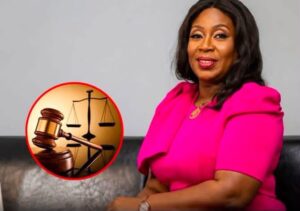
Accra Circuit Court has sentenced TikTok creator Camilla Alhassan to one year in prison after she pleaded guilty to charges of offensive conduct and publication of false news.
The court, presided, handed down the sentence on Wednesday, August 27, 2026, following Alhassan’s own plea. Prosecutors said the TikToker published videos containing false claims about President John Dramani Mahama, which were later shared widely on social media.
The Charges
Alhassan was charged under two laws:
- Section 207 of the Criminal Offences Act, 1960 (Act 29) Offensive conduct conducive to breaches of the peace. The section criminalises conduct that is “likely to provoke a breach of the peace or to offend public morality.”
- Section 208 of Act 29 — Publication of false news. It states: “A person who publishes or reproduces any statement, rumour or report which is likely to cause fear and alarm to the public or to disturb the public peace, knowing or having reason to believe that the statement, rumour or report is false, commits a misdemeanour.”
The maximum penalty for each count is three years. The court sentenced her to 12 months on each count, to run concurrently.
Court Proceedings
According to the facts presented, posted the offending videos to her TikTok account in early Juky 2026. The content alleged misconduct by the President without evidence. The videos garnered over 200,000 views before they were taken down.
She was arrested by the Ghana Police Service’s Cybercrime Unit In court, Alhassan pleaded guilty to both charges and told the judge she “did not verify the claims” and was “sorry for the harm caused.”
Her counsel, pleaded for leniency, citing her status as a first-time offender and mother of two. He asked the court to consider a fine instead of a custodial sentence.
But Judge said a custodial sentence was necessary “to serve as a deterrent” given the reach of social media. “Free speech is guaranteed under Article 21(1)(a) of the 1992 Constitution, but it is not a licence to publish falsehoods that injure reputations and disturb public order,” the judge stated.
Legal Context
The Supreme Court has upheld Section 208 in Republic v. Independent Media Corporation of Ghana [1996-97] SCGLR 258, ruling that the provision is a reasonable limitation on free expression under Article 164, which allows laws “reasonably required… for the purpose of safeguarding the people of Ghana against the dissemination of falsehood.”
However, in Republic v. Mensa-Bonsu & Others [1996-97] SCGLR 475, the Court narrowed the offence, holding that the prosecution must prove the accused knew the information was false or had reason to believe so, and that it was likely to cause fear and alarm.
Media rights groups have long argued that Section 208 is overly broad. The Ghana Journalists Association in 2023 renewed calls for its repeal, citing its “chilling effect” on speech. Parliament has debated amendments but the law remains in force.
Reaction
The Ministry of Information said in a statement that “the verdict underscores that no one is above the law, and that digital platforms must be used responsibly.”
The Media Foundation for West Africa urged courts to “apply custodial sentences sparingly in speech offences,” while acknowledging that “deliberate falsehoods can harm democracy.”
Alhassan has 30 days to appeal under Section 326 of the Criminal and Other Offences (Procedure) Act, 1960 (Act 30). Her lawyers say they are studying the judgment.
The case is the latest in a string of prosecutions under *Sections 207 and 208 involving social media content. It tests the balance between Article 21 free expression rights and Article 164 limits on false publication.